AI for Healthcare
Save time on documentation. Improve patient communication. Adopt AI with clinical safety and governance in mind.
For doctors, nurses, hospital administrators, clinic owners, diagnostic centres, and healthcare professionals.
A focused 3-hour curated roundtable on how AI can support healthcare teams across documentation, nursing handovers, patient communication, diagnostic workflows, front-office operations, and responsible adoption. Examples are developed with clinician input and every safety guardrail is explicit. Ahmedabad pilot, featuring Dr. Sharad Maheshwari (Consultant Radiologist & Lead Clinical AI, Kokilaben Hospital) as clinical co-presenter. Invite-only — audience is curated for cohort fit.
Venue updateThe roundtable will be held in Ahmedabad — we're finalising the exact venue in the next few days. Registered participants will be emailed the confirmed address as soon as it's locked.
Healthcare AI experience acrossDiagnostics · Radiology · Hospital Ops · Patient Communication
Where AI can help your team
Six outcomes AI can enable across healthcare roles
A grounded view of where AI genuinely helps healthcare teams today — by role. The session gives you the framework, safety framing, and 30-day starting plan to pursue any of them; the clinical detail is covered in the four areas of practice below.
For doctors
Reclaim your clinical time
Consultation notes, referral letters, and discharge summaries drafted in minutes — reviewed and sent by you. Take back the hours you spend on typing.
For nurses & care teams
Cleaner shift handovers
Structured handover notes and care checklists drafted from your voice or written notes — reviewed by you, standardised across shifts.
For clinics & hospitals
Multilingual patient communication
Instructions, follow-ups, and lifestyle guidance in Hindi, Gujarati, and English — same clinical clarity, without hiring extra staff.
For radiology & diagnostics
Assistive triage & reporting
Where AI-assisted triage genuinely helps today (and where it doesn't) — plus draft-and-review patterns for reports and follow-ups. Physician judgment leads.
For administration
Front-office reliability
Smarter appointment reminders, an FAQ assistant for common queries, and AI-drafted pre-auth documentation — patterns clinics are using to cut no-shows and rework.
For leadership & compliance
A governance posture you can defend
No PHI in public tools, physician-verified output, and an audit trail — a stance your compliance officer and board can sign off on.
These are outcomes AI can enable for a healthcare team over thoughtful adoption — not deliverables of a 3-hour session. The workshop gives you the framework, safety framing, and 30-day starting plan. Every outcome is delivered with human-in-the-loop review, no PHI in public tools, and clinician-verified output.
Why this is different
Not a generic AI workshop. A healthcare-first conversation.
Healthcare professionals are curious about AI but rightly skeptical. The bar for a clinical room is different from a business room — what is useful, what is safe, what is legally and clinically acceptable, and what actually saves time without compromising care.
This session is built to that bar. Every example is clinical, nursing, or healthcare-operational — no generic prompting, no overclaiming, no “AI will replace doctors” theatrics. Clinical responsibility, patient privacy, and medico-legal boundaries are woven into every section, not bolted on at the end.
The Ahmedabad pilot is an invite-only cohort of 50–75 healthcare professionals — doctors, nurses, hospital administrators, and diagnostic-centre leaders, with a senior clinical specialist co-presenting and a tight three-hour format that respects healthcare-team time. Apply through the register form and our team reviews for cohort fit within 3 business days.
How those outcomes are delivered
Four areas of practice — the clinical detail
Each outcome above maps to concrete AI use cases across four practice areas, developed with clinician input. Every example is real, immediate, and covered live in the session.
Clinical Documentation
- →Consultation notes and SOAP drafts
- →Discharge summaries and referral letters
- →Nursing shift handover and care notes
- →Voice notes → structured clinical notes
- →Insurance and pre-authorisation documentation
- →Medical certificates and incident notes (clinician-reviewed)
Radiology & Diagnostics
- →Where AI is genuinely useful in imaging today
- →Triage and worklist prioritisation
- →Second-read support — promise and limits
- →False positives vs false negatives — the honest data
- →Why AI is assistive, not autonomous
- →What radiologists and centres should and should not trust
Patient Communication & Education
- →Simplifying medical explanations for patients
- →Multilingual patient instructions and handouts
- →Chronic-care follow-up message drafts
- →WhatsApp / email patient communication templates
- →Lifestyle, adherence, and post-procedure guidance
- →Always reviewed by a clinician before sending
Hospital, Clinic & Admin Operations
- →Appointment follow-up and no-show reduction
- →FAQ assistant for common patient queries
- →Billing, pre-auth, and insurance documentation
- →Front-desk SOPs and staff training material
- →Patient feedback analysis at scale
- →Inventory, procurement, and reporting support
Different specialty or healthcare role? Tell us your area — we'll bring relevant examples →
Sample agenda
Three hours · Clinician-first · Peer dialogue
Specialist co-presenter, real healthcare examples, and an honest section on what AI cannot do — not just what it can.
| 0:00–0:15 | Opening: AI in Healthcare — Hype vs Practical Reality |
| 0:15–0:45 | Clinical Documentation + Multilingual Patient Communication |
| 0:45–1:15 | Specialist: AI in Radiology & Diagnostics — Dr. Sharad Maheshwari (Kokilaben) |
| 1:15–1:30 | Break |
| 1:30–1:55 | Nursing Workflows: Handover, Care Notes, Patient Education |
| 1:55–2:20 | Hospital & Clinic Operations: FAQs, Pre-Auth, Front-Office |
| 2:20–2:45 | Responsible AI: Privacy, Safety, Governance, Medico-Legal |
| 2:45–3:00 | Where to Start: 30-Day Adoption Plan + Panel Q&A |
What attendees receive
Tangible takeaways for your practice
Practical artefacts you can use with your team the following week.
Every attendee receives
AI Guru® Certificate of Participation
Signed by Ritesh Vajariya, Founder of AI Guru. Issued digitally after the roundtable — LinkedIn-shareable, printable, and yours to keep.
Not accredited CME. Preview shown — your certificate will carry your name and the event date.
Non-negotiable
Safety, privacy & medico-legal — built in, not bolted on
These principles are how we built the session. They are also the answer to every “but is this safe?” question from your compliance team.
●Never paste identifiable patient data into public AI tools
We cover which tiers and tools are appropriate for what types of clinical and patient data — and what should never leave your environment.
●AI output must be clinician-verified
Every clinical or patient-facing output is a draft until a doctor or qualified clinician signs off. AI accelerates the first pass; it does not replace clinical judgment.
●AI cannot replace clinical judgment
This session is unambiguous on this point. AI is assistive — diagnostic decisions, treatment plans, and clinical reasoning remain physician-owned.
●Hospital policy and consent matter
Adoption framework includes what to clear with your hospital, your compliance team, and your patients before deploying AI in care or admin workflows.
●Hallucinations and bias are real
We show real failure modes with real examples — and the verification habits that catch them before they reach a patient.
●Medico-legal disclaimer
This is not legal advice. Doctors, clinics, and hospitals should consult their compliance, legal, and indemnity providers before adopting AI in clinical or admin workflows.
Speaker lineup
AI practitioner + senior clinician + local healthcare voice
We pair an AI practitioner with credible clinical voices. This is not “tech guy teaching healthcare” — it is healthcare professionals discussing AI with an AI practitioner.
Confirmed
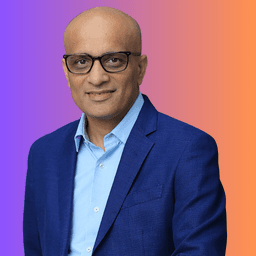
Ritesh Vajariya
Founder, AI Guru · Harvard Business School alum
AI landscape, practical workflows, safety framework, implementation reality. Two decades in enterprise AI — Amazon Web Services (led AI GTM, $700M+ AI revenue), Cerebras Systems (global GenAI strategy), and Bloomberg (architected core systems for BloombergGPT).
Healthcare AI courses
4 live on Coursera
Healthcare learners
2,900+ enrolled
Coursera: Clinical Documentation · Healthcare Automation · Personalized Care · Telemedicine Data Security. Also builds AI products: Vaidu (healthcare AI). Operator, not consultant.
Confirmed · Clinical Co-presenter
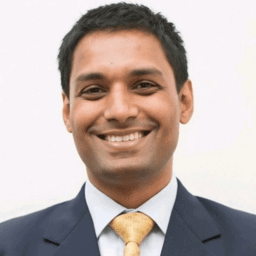
Dr. Sharad Maheshwari
Consultant Radiologist & Lead Clinical AI
Kokilaben Hospital, Mumbai
Clinical reality of radiology AI — promise, limits, adoption barriers, and where physician judgment must lead. Deep focus on responsible AI adoption in healthcare.
Per city
Local Healthcare Voice
Ahmedabad pilot · regional practice perspective
A locally respected physician, hospital administrator, or diagnostic-centre leader to ground the session in regional clinic and patient reality. Identified per pilot city.
Curated audience
Who this session is for
Peer-heavy room across the healthcare team. We deliberately keep the pilot to practicing professionals so the dialogue stays grounded in real workflows.
Specialty society lead, hospital admin, or healthcare entrepreneur? Request an invite →
Format options
How this is delivered
Ahmedabad Pilot · Curated cohort
Curated roundtable
50–75 professionals · Invite-only pilot
- ✓3-hour healthcare session
- ✓Senior specialist co-presenter
- ✓Peer dialogue and Q&A
- ✓Curated healthcare audience
Public · Paid
Healthcare workshop
₹999–₹4,999 · upcoming cities
- ✓Same 3-hour format
- ✓Limited seats, curated audience
- ✓Includes safety framework kit
- ✓Launches post-pilot
Hospital / Society
Sponsor-hosted
Custom · members usually free
- ✓Co-branded clinical session
- ✓Specialty-specific agenda
- ✓Sponsor handles invitations
- ✓Optional accreditation support
Host this session
For hospitals, diagnostic centres & healthcare societies
If you lead a hospital network, diagnostic centre, specialty society, IMA chapter, nursing leadership network, or medical-college CME channel — we'd like to talk. A typical partnership: you bring the healthcare audience and the venue; we bring the speakers, content, demos, and safety framework.
Member sessions are typically free for invited attendees under a partnership. The agenda adapts to your members' specialties — radiology-heavy, surgery-focused, primary care, nursing leadership, hospital admin, or mixed. Accreditation arrangements through your channels welcome.
Particularly relevant for
Frequently Asked Questions
Is this accredited CME?+
No. This is a clinical AI awareness session and roundtable discussion — not accredited Continuing Medical Education. We deliberately avoid the CME label because CME has formal accreditation implications. If your hospital or association arranges accreditation through their channels, we are happy to support that process.
Will this be relevant for nurses, administrators, and non-physicians?+
Yes. Each of the four clinical areas has examples for the whole healthcare team — nursing handover and care notes, hospital and clinic operations, patient communication, billing and pre-auth, and front-desk SOPs are all covered. The session is designed for the workflow, not just the physician.
Who is the speaker?+
Ritesh Vajariya (Founder, AI Guru) leads the AI landscape, practical workflows, and safety framework. The Ahmedabad pilot is co-presented by Dr. Sharad Maheshwari — Consultant Radiologist & Lead Clinical AI at Kokilaben Hospital, Mumbai, and Founder of BeResponsibleAI and the Institute for Responsible Healthcare AI. For each city, we aim to include at least one credible local healthcare voice (physician, administrator, or diagnostic-centre leader) alongside the specialist session.
Will AI replace doctors or nurses?+
No — and we are explicit about this in the session. AI is assistive, not autonomous. The current generation of AI is highly useful for documentation, triage, patient communication, and operations. Diagnosis, treatment, nursing judgment, and clinical reasoning remain owned by qualified healthcare professionals.
What about patient data privacy?+
Covered directly. The session opens with which AI tiers and tools are appropriate for what types of clinical and patient data — and what should never leave your environment. We cover tool selection (consumer vs enterprise tiers), de-identification practices, and how to set basic AI usage policies for clinic and hospital teams.
What is the format and duration?+
3 hours. The Ahmedabad pilot is a curated roundtable for 50–75 healthcare professionals — clinician-first tone, peer-heavy room, real Q&A. Future public versions and city expansions will be announced based on pilot response.
Is there a fee?+
The Ahmedabad pilot is running invite-only for the first cohort — no seat fee for confirmed clinicians in this batch. What confirmed participants receive: the roundtable, safety framework kit, 30-day AI adoption roadmap, and the AI Guru® Certificate of Participation. Sponsored hospital / association / healthcare-group versions are also available — reach out via the host CTA on this page.
Will this be run in other cities?+
Ahmedabad is the pilot. Based on response and partner interest, we plan to extend to Mumbai, Pune, Hyderabad, and other cities with strong specialty-society and hospital-network interest. If you'd like to host in your city or hospital, get in touch.
Can my hospital or association host this?+
Yes. A typical partnership: you bring the healthcare audience and the venue; we bring the speaker(s), content, demos, and safety framework. We can also customise the agenda for specific specialties or audiences — radiology-heavy, surgery-focused, primary care, nursing leadership, hospital admin, or mixed.
Led by
Ritesh Vajariya, Founder of AI Guru
Ritesh has spent nearly two decades in AI, cloud, and enterprise technology — including leadership roles at Amazon Web Services (AWS), Cerebras Systems, and Bloomberg. Through AI Guru he has shipped 20 AI products into production across 9 industries (including healthcare) and trained 200,000+ professionals across 4 continents.
His healthcare teaching muscle sits on Coursera as four live GenAI courses — Clinical Documentation, Healthcare Automation, Transforming Personalized Care, and Telemedicine Data Security — with 2,900+ combined enrolments. This session leans on that prior healthcare-specific teaching work.
Originally from Gujarat and now based out of Princeton, NJ, USA, Ritesh works closely with hospitals, diagnostic centres, specialty societies, and clinic owners on responsible AI adoption — focused on clinical safety, physician and nursing judgment, and measurable workflow impact, not hype.
Western India is AI Guru's home delivery base — operations are run from Ahmedabad and institutional ties are deepest across Gujarat, MP, and Maharashtra. Global HQ is in Princeton, NJ.
Medico-legal disclaimer. This session is not accredited Continuing Medical Education (CME), and its content is not legal, medical, or compliance advice. The session does not provide patient-specific medical advice or recommend diagnosis or treatment decisions. AI tools discussed are assistive and require clinician verification. Doctors, nurses, clinics, and hospitals should consult their compliance, legal, and indemnity providers before adopting AI in clinical or admin workflows. Hospital and institutional policies apply.
Part of
AI Guru's India Workshop Series · 2026
We also run campus tracks (Software Engineers, Working Professionals), a workshop for business owners and industry leaders, and a two-track HR programme.