Every few years a technology comes along that reshapes how people talk about the future. Right now that technology is artificial intelligence. The problem is that most explanations jump straight to self-driving cars and robot surgeons, which makes AI feel distant and intimidating. It does not have to be.
A Working Definition
At its simplest, artificial intelligence is software that learns from examples and makes predictions or decisions based on what it learned. That is it. No sentience, no consciousness, no hidden agenda — just pattern recognition at enormous scale.
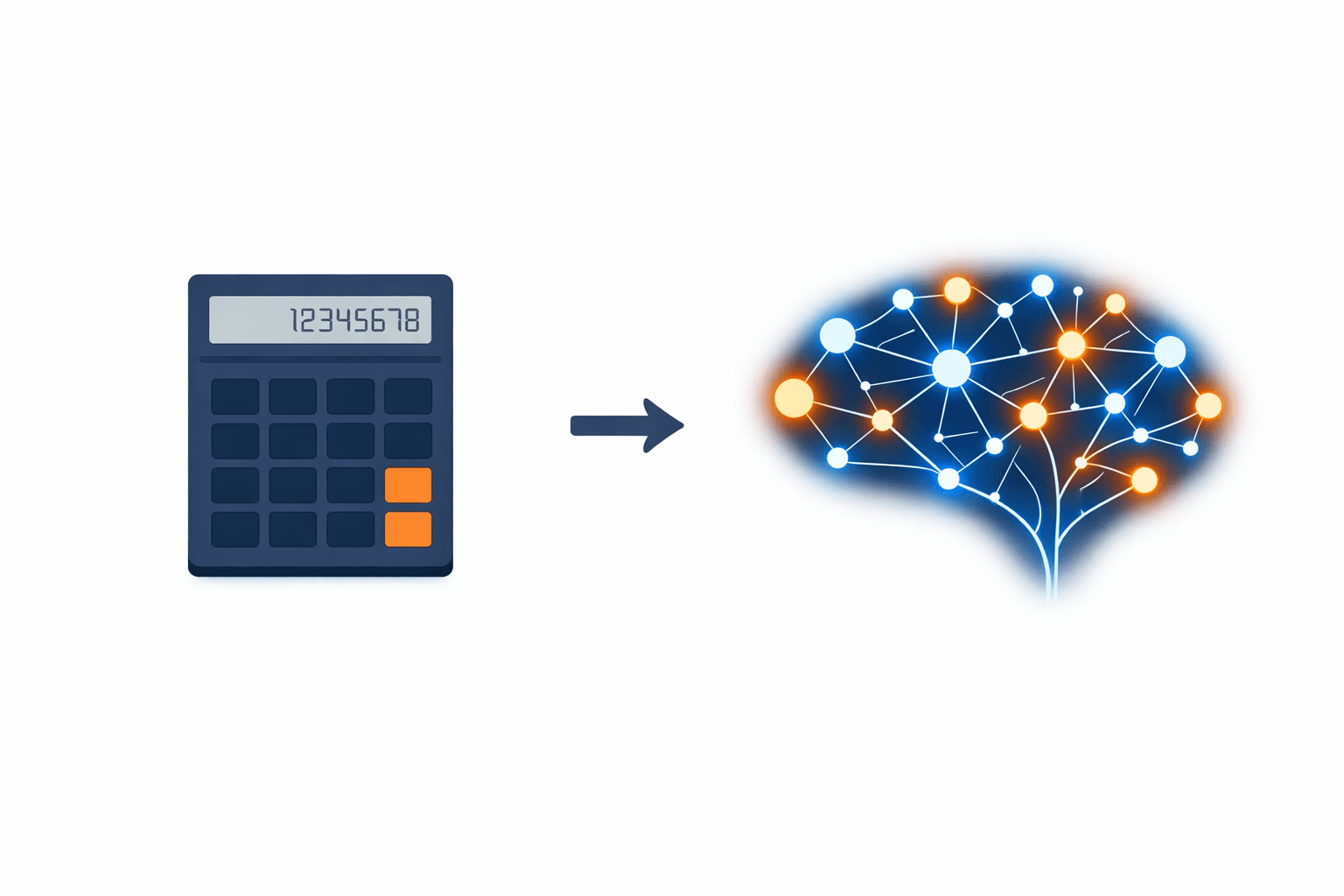
Traditional software follows rules that a programmer writes line by line. If a customer's order total is above fifty dollars, apply free shipping. The logic never changes unless a human changes it. AI works differently. Instead of writing rules, engineers feed the system thousands — sometimes billions — of examples and let the software figure out the patterns on its own.
Three Types You Already Encounter
Most AI that touches your daily life falls into one of three buckets:
- Predictive AI looks at past patterns to forecast what comes next. Your bank uses it to flag unusual transactions. Weather apps use it to tell you whether to carry an umbrella.
- Generative AI creates new content — text, images, music, code — by learning from vast collections of existing work. ChatGPT and DALL-E are popular examples.
- Recommender AI suggests things you might like based on what you and people like you have chosen before. Netflix recommendations, Spotify playlists, and Amazon's 'customers also bought' section all run on this.
What AI Is Not
AI is not conscious. It does not understand meaning the way you do. It does not have goals, feelings, or desires. When a chatbot writes a poem that makes you emotional, the emotion is yours — the software is just predicting which word comes next based on probabilities.
AI is also not always right. Because it learns from human-generated data, it inherits human errors, biases, and blind spots. A confident-sounding answer from an AI tool can be completely wrong. This is important to remember every time you use one.
The Four-Sign Test
Not sure whether something qualifies as AI? Ask these four questions:
- Does it learn from data rather than following fixed rules?
- Does it adapt its behavior as it gets more information?
- Does it predict outcomes or patterns?
- Does it generate new content based on what it has learned?
If the answer to any of these is yes, you are probably looking at AI. If all four are yes, you are definitely looking at AI.
Why This Matters
Understanding what AI is — and is not — gives you a foundation for every decision you will make about it. Whether you are evaluating a new tool at work, reading a headline about regulation, or deciding whether to trust a chatbot's medical advice, this baseline understanding is your starting point.
AI is not magic. It is math, data, and engineering working together at a scale humans cannot match manually. That makes it powerful, useful, and sometimes risky — all at the same time. Knowing the difference puts you ahead of most people who are still deciding whether to be impressed or terrified.