Ritesh Vajariya
CEO, AI Guru | 50K+ Users, 4 Live Products | Former AWS, Cerebras, Bloomberg
December 2025
Last month, I was in a planning meeting with a client's leadership team. They were reviewing headcount for 2026. Halfway through, the COO said something that stopped the room:
"We're not asking 'how do we train people on AI' anymore. We're asking 'which of these roles should still exist?'"
Nobody responded. But everyone understood.
That's the shift that happened this year. And most people haven't caught up to it yet.
The Question Changed
For two years, the comfortable framing was: AI will change jobs, but we'll retrain people and everything will be fine.
In 2025, that story quietly died.
Not because training doesn't work. I've trained over 25,000 professionals. I know it works. But there's a difference between training people who choose to evolve and trying to reskill an entire workforce into roles that shouldn't exist anymore.
LinkedIn's 2024 Workplace Learning Report found that large-scale corporate reskilling programs—the expensive, one-size-fits-all initiatives meant to retrain thousands at once—fail almost universally. Fewer than 5% even get far enough to measure success.
Meanwhile, the individuals who self-select into learning? Who show up because they want to evolve? They thrive.
The difference isn't whether training works. It's who you're training, and for what.
What Actually Happened
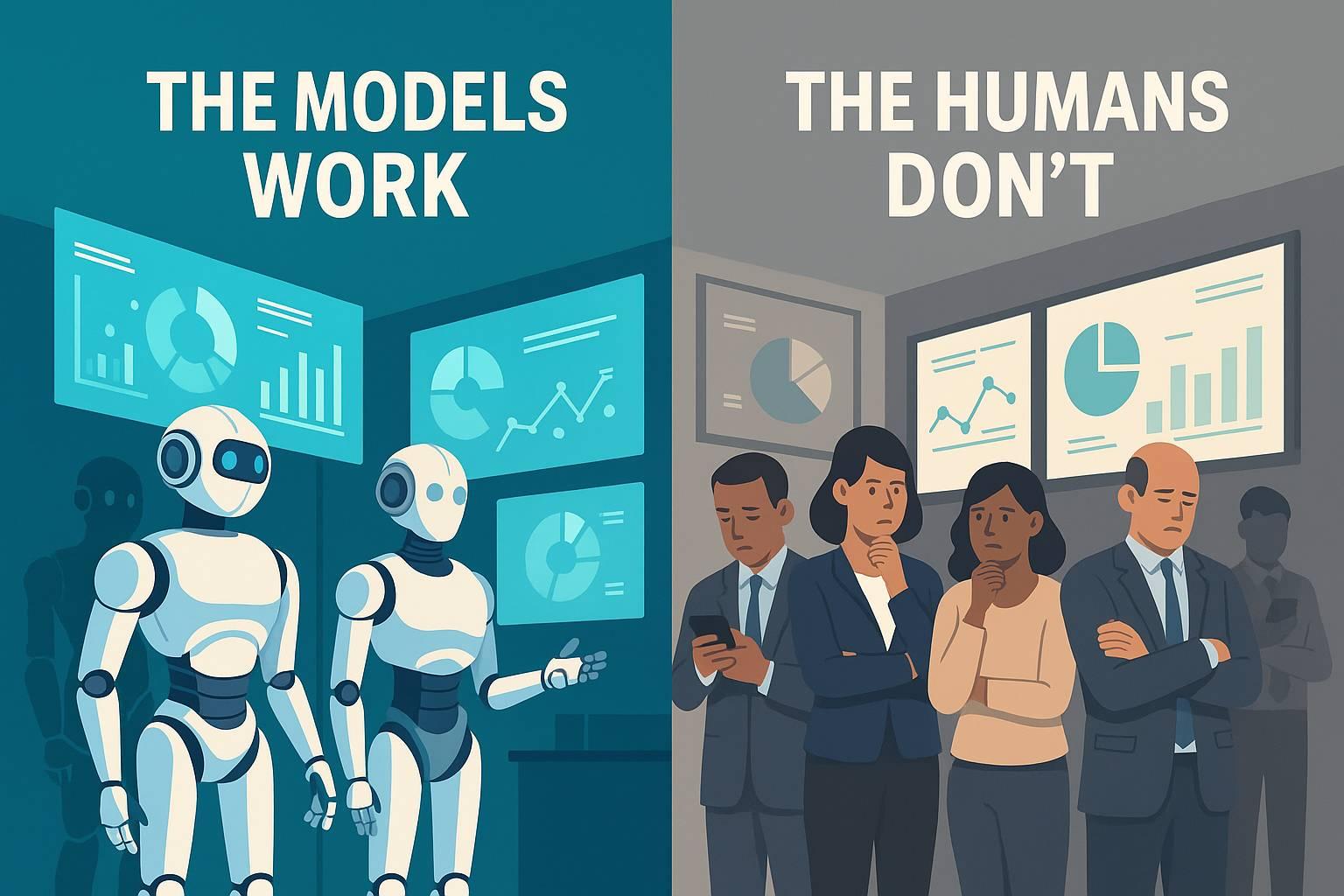
Companies didn't fail at training. They failed at honesty.
They launched reskilling programs to save roles that were already obsolete. They trained people to use AI tools in jobs that AI was about to eliminate entirely. They measured completion rates instead of asking whether the work itself still made sense.
The companies that moved didn't train people to keep their old jobs. They redesigned the work, then trained the people who could grow into what remained.
Microsoft said AI tools now write 30% of their new code. IBM eliminated 8,000 HR positions and replaced them with an internal AI system. Amazon's CEO told staff to expect fewer people in many roles as AI agents scale.
These aren't training failures. They're design decisions. The work changed. Some people evolved with it. Others didn't.
The Uncomfortable Truth for 2026
Here's the position I'm confident in:
In 2025, organizations asked "How do we adopt AI?" In 2026, they'll ask "Which roles no longer make sense?"
The first question is about technology. The second is about organizational truth.
Most companies aren't ready for that conversation. It challenges career paths, org charts, and comfortable assumptions about what jobs should exist. It forces leaders to say things out loud that they've only thought privately.
But the companies that avoid it will fall behind the ones that don't.
What This Means for You
If you're a leader: Stop using training programs to delay hard decisions. The question isn't "How do we upskill everyone?" It's "How should this work flow, and who do we need to do what's left?"
If you're a professional: Training works—if you're evolving toward something real. If your company is training you to do the same job with AI assistance, ask yourself whether that job will exist in 18 months. If not, train yourself toward something that will.
If you're in HR or L&D: The honest conversation isn't "How do we reskill everyone?" It's "Who can transition, who can't, and what do we do about both?" Mass programs fail. Targeted development for motivated people works.
The Real Test
Here's how you know if your organization is ready for 2026:
Can your leadership team have an honest conversation about which roles shouldn't exist in 18 months?
Not "might change." Not "will evolve." Shouldn't exist.
If that conversation feels impossible, you're behind. If it already happened, you're ahead. If it's happening right now, you're in the messy middle where the real work gets done.
The companies that win next year won't have the best AI. They'll have leaders willing to ask the question nobody wants to ask, and act on the answer.
P.S. That COO who stopped the room? Her company cut 30% of middle management roles in Q3. Not layoffs, redesigns. Some people moved into new roles. Some didn't make it. But the company is moving twice as fast as it was in January. That's the trade-off nobody talks about openly. But it's the one that matters.
P.P.S. Is your organization having this conversation yet? Or still pretending training will solve it? Hit reply. I want to know what you're seeing.
The future is already being decided. Most people just aren't in the room yet.
© 2025 AI Guru | LinkedIn | AIGuruHQ.com
Shameless plug:
Do you know someone who can benefit by learning the fundamentals of Artificial Intelligence (AI) and Machine Learning (ML)? You are in luck!
I have created a fundamental course on AI/ML where I explain this complex topic is the most simply way - some of my students calls it “oversimplifying”!
Click on this link and gift them the course - and yes, they do not need technical background. I mean it - else they get their money back! Guarantee!