My take on what's happening to our brains in the age of AI, and how we can navigate it wisely
Last week, I had coffee with a professor friend who said something that stuck with me: “My students are getting smarter and dumber at the same time.”
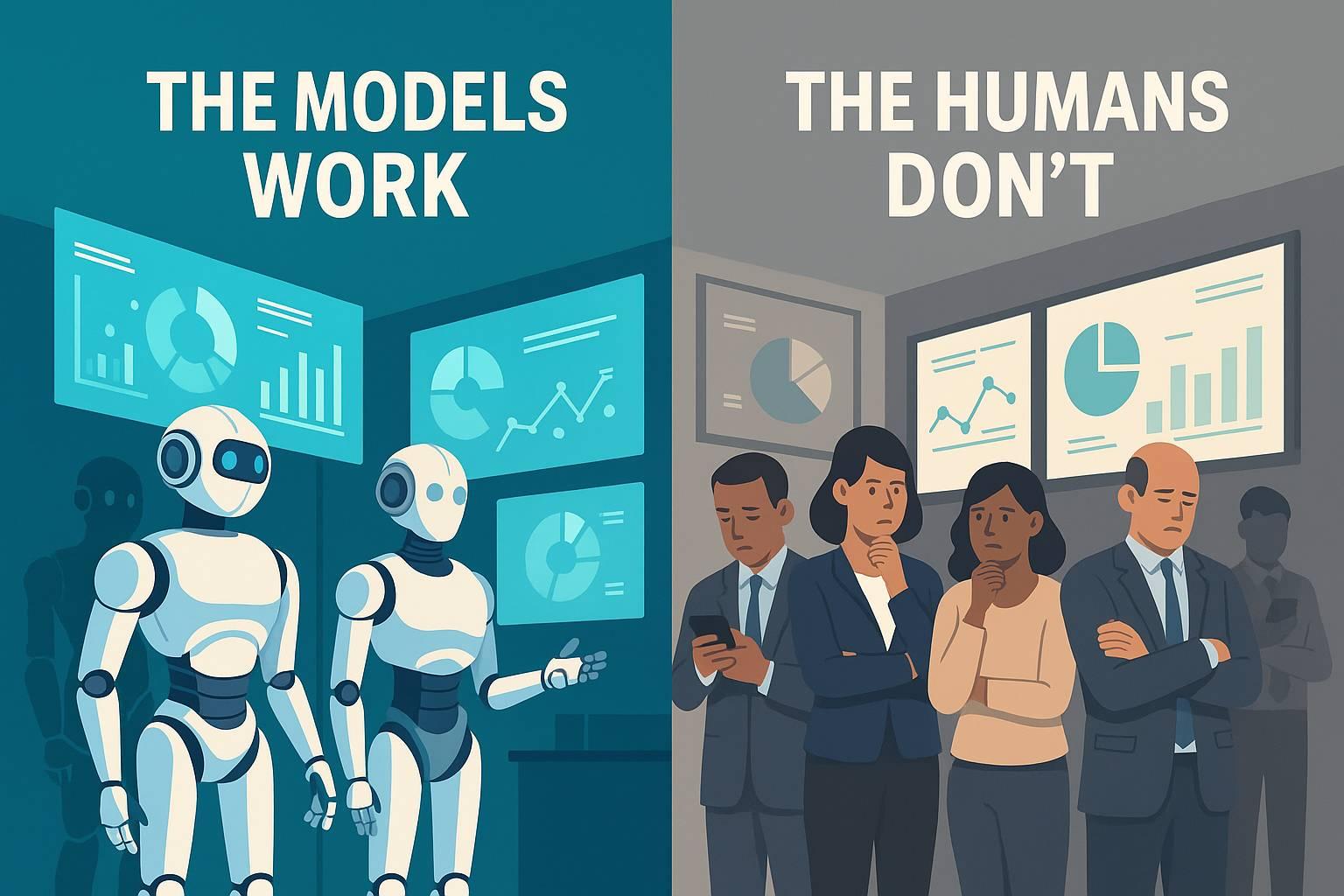
She wasn’t wrong. And after diving deep into the latest research on AI in education, I think I understand why we’re all experiencing this paradox—not just students, but all of us navigating this AI-enhanced world.
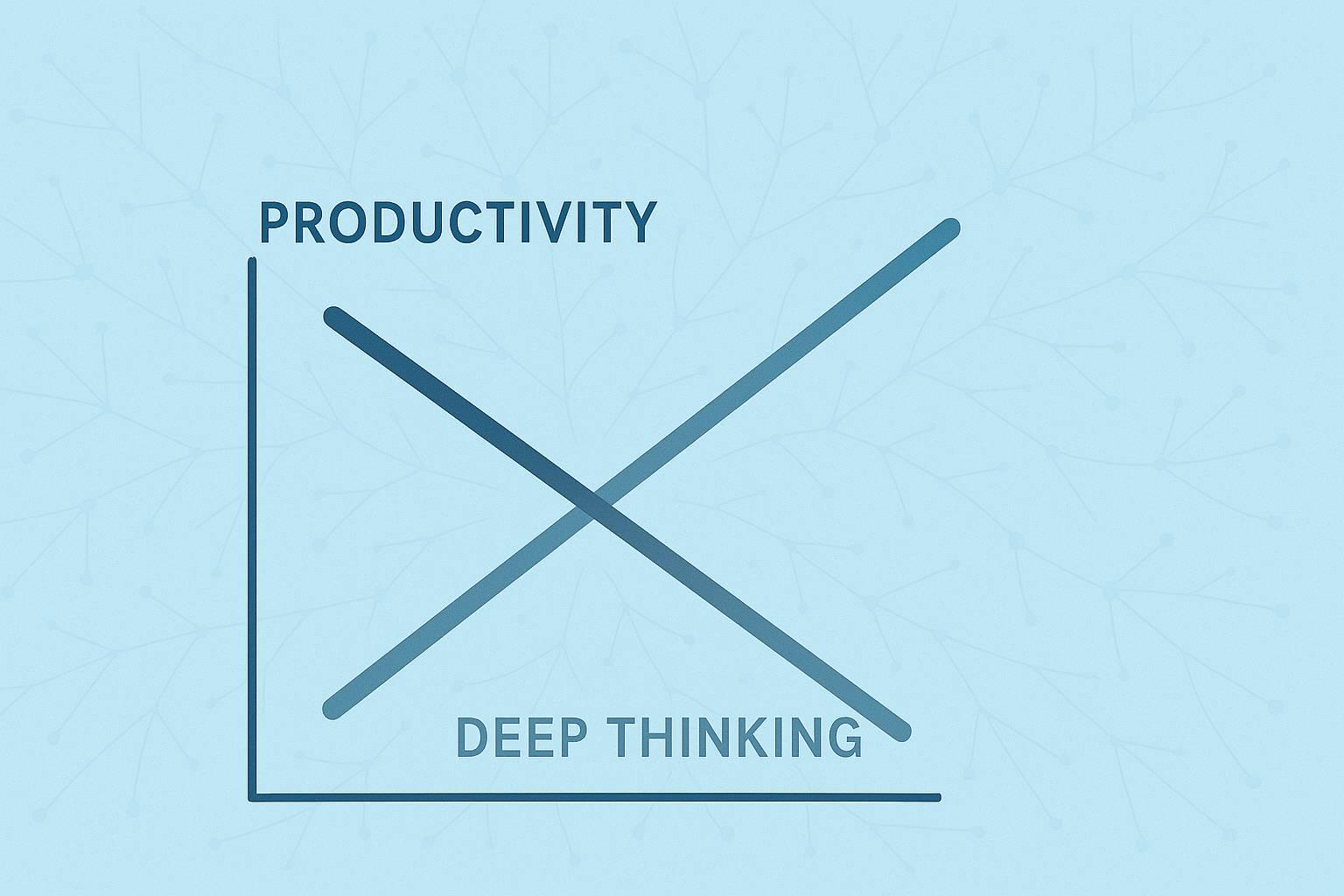
We’re living through what I believe is the most significant transformation in how humans think since the printing press. We’re getting incredibly efficient at producing outputs while potentially losing our ability to think deeply. We’re accessing vast knowledge instantly while struggling to retain any of it. We’re becoming smarter and dumber simultaneously, and I’m not sure we fully grasp what that means yet.
Let me share what I’ve discovered, and more importantly, what I think it means for all of us trying to navigate this new landscape.
The Study That Shows We’re All in This Together
Just last month, I came across a study from MIT’s Media Lab that honestly made me pause—not just as an educator, but as someone who uses AI daily. Researchers hooked up 54 university students to EEG machines to monitor their brain activity while writing essays. They divided them into three groups: using ChatGPT, using Google Search, or good old-fashioned writing with just their brains.
Here’s what they found:
- Students using ChatGPT showed 55% less neural connectivity than those writing unassisted
- Brain regions tied to creativity and memory? Significantly quieter
- And this is the kicker: 83% of the ChatGPT users struggled to accurately recall content from essays they had just completed
Now, I’ve been bullish on AI in education. But this finding? It made me realize we’re all experiencing this same phenomenon. Think about your last day: How many emails did you write with AI help? How many decisions did you make based on AI analysis? And more importantly—could you recreate that thinking without the tools?
We’re becoming more productive (smarter) while potentially losing our cognitive independence (dumber).
My Take on Why We’re All Getting “Cognitive Debt”
The MIT team introduced this concept of “cognitive debt”—and honestly, it perfectly captures what’s happening to all of us, not just students. Think of it like this: every time we outsource our thinking to AI, we’re essentially taking out a loan against our future cognitive abilities.
The interest rate? Our capacity for deep thinking.
Dr. Nataliya Kosmyna, who led the study, put it bluntly: developing brains are at the highest risk. But here’s what I think she didn’t say explicitly—we’re all “developing brains” when it comes to AI. Whether you’re 18 or 58, your brain is adapting to this new cognitive partnership.
What worries me most is this broader pattern: - Gerlich’s 2025 study (Gerlich, 2025 - Critical Thinking in the Age of AI) found a strong negative correlation (r = -0.68) between heavy AI use and critical thinking - It hit younger users (17-25) the hardest - Even simple pretesting before AI use made a huge difference in retention
I think we’re all running a massive experiment on our cognitive capabilities, and we don’t yet know the results. But the early data suggests we need to pay attention.
But Here’s Where It Gets Interesting (The “Smarter” Part)
Now, before you think I’m anti-AI (I’m not!), let me share why we’re also becoming smarter. Because when we get this right, the results are genuinely exciting.
The Time We’re Getting Back
I’ve been tracking various implementations, and the numbers are compelling. The POLITEHNICA (National University of Science and Technology POLITEHNICA Bucharest, 2024) Bucharest study found 49.4% of students saved significant time with AI—we’re talking about cutting study time in half.
But here’s my question: What are we doing with that time?
Singapore’s teachers are saving 5 hours weekly on routine tasks (https://www.moe.gov.sg/). In my view, that’s 5 hours that could transform education—if we use them for human connection, creativity, and real mentoring. Or it’s 5 hours of human interaction lost forever. The choice is ours.
Success Stories That Give Me Hope
Let me share three implementations that I think are getting it right:
Georgia Tech’s “Jill Watson” impressed me not because it’s sophisticated AI (though it is), but because of what it doesn’t do. It handles the routine questions—91% accuracy—so human TAs can have real conversations with students. That’s augmentation done right.
Ivy Tech’s early warning system is, in my opinion, AI at its best. It spotted at-risk students by week two, but—and this is crucial—humans did the intervention. Result? They saved 3,000 students from failing. The AI didn’t save those students; it gave humans the information to save them.
Australia’s Maths Pathway gets my vote for understanding the assignment. AI personalizes the difficulty level, but teachers still teach. It’s like having a really smart teaching assistant who never gets tired. But the teacher is still the teacher.
What I Think Actually Works
After reviewing dozens of studies and implementations, I’ve come to believe successful AI integration follows a clear pattern. And it’s not what most people think.
My Three-Stage Framework
From what I’ve seen, AI in education evolves through three stages:
- AI-Directed: The AI leads, students follow → Honestly? Limited value
- AI-Supported: AI assists human thinking → Better, but not transformative
- AI-Empowered: Students lead, AI amplifies → This is where magic happens (up to 70% improvement)
Most schools are stuck in stage one. The successful ones? They’re pushing toward stage three.
The Counterintuitive Finding I Love
Bellwether Education discovered something that initially surprised me but now makes perfect sense: AI tutors that are deliberately “unhelpful”—constantly asking “why?” instead of giving answers—produced nearly double the learning gains.
Why? Because struggle is the gym for our brains. Remove all the weights, and you don’t get stronger.
Building Real AI Literacy (Not What You Think)
I’ve become convinced that we’re teaching AI literacy all wrong. It’s not about prompt engineering or using ChatGPT better.
Real AI literacy, in my view, means knowing: - When NOT to use AI (this might be the most important skill) - How to argue with AI outputs - Why AI might be wrong (and it often is) - How to maintain your own thinking while using AI tools
The EU/OECD framework (EU/OECD AI Literacy Framework, 2024) breaks it into four domains, but I think it boils down to this: Can you think with AI without letting AI think for you?
What I’ve Seen Work in Practice
Let me share some approaches that I believe strike the right balance:
In Elementary Schools
Start each day with 15 minutes of AI-free creative work. I call it “cognitive coffee”—wake up your brain before you augment it. Then use AI for personalized reading levels, but always—always—discuss the content human-to-human.
In High Schools
I love the lab approach: real experiments, AI analysis, human interpretation. Students should be able to explain why the AI might be wrong. If they can’t, they’re not learning; they’re just following.
In Universities
Here’s my controversial take: every AI-assisted paper should require an oral defense. Can’t explain your own arguments without notes? Then they’re not your arguments.
My Five Principles for Leaders
If you’re leading an educational institution or team, here’s what I believe matters most:
1. Start Human, Add AI Gradually Don’t throw people into the deep end. Build core skills first, then show how AI amplifies them.
2. Protect Productive Struggle Use AI to kill busywork, not thinking work. There’s a difference, and it matters.
3. Make AI Literacy Mandatory Before anyone uses AI tools, they need to understand what they’re trading. No exceptions.
4. Rethink Assessment Completely If AI can ace your test, you’re testing the wrong things. Focus on application, synthesis, and defense of ideas.
5. Keep Humans at the Center Every AI decision should answer: Does this make humans more human or less?
Where I Think We Go From Here
I believe we’re at a crossroads. The MIT study showing 83% of students struggling to recall their own AI-assisted writing isn’t a condemnation of AI—it’s a wake-up call about implementation.
Here’s what I think needs to happen:
For educators: We need to become AI-literate fast, but more importantly, we need to stay human. Our value isn’t in information delivery anymore—it’s in connection, inspiration, and teaching people how to think.
For institutions: Stop chasing efficiency metrics. Start measuring actual learning. The most efficient path isn’t always the best one for developing minds.
For policymakers: We need longitudinal studies yesterday. We’re making generational decisions with limited data.
For parents: Ask your kids to explain their homework. If they can’t, that’s a red flag worth investigating.
My Bottom Line on Our Smarter-Dumber Future
I’m not anti-AI. I’m pro-human cognition. And I believe we can be both smarter AND maintain our ability to think—if we’re intentional about it.
The schools, organizations, and individuals who will thrive aren’t those using the most AI or the least AI. They’re the ones who understand this paradox and navigate it wisely. They get smarter through AI while protecting their ability to think without it.
We’re not choosing between human and artificial intelligence. We’re choosing what kind of thinkers we want to develop. And that choice will echo for generations.
What worries me isn’t that AI will replace teachers. It’s that we’ll forget why teachers can’t be replaced.
I’d love to hear your thoughts on this. What are you seeing in your schools or organizations? Are we finding the right balance, or are we tilting too far one way? Drop a comment—let’s figure this out together.
AIinEducation #ThoughtLeadership #FutureOfLearning #Education #CognitiveDevelopment #EdTech #Leadership #ParentingInDigitalAge #Teaching #AIGuru
Shameless plug:
Do you know someone who can benefit by learning the fundamentals of Artificial Intelligence (AI) and Machine Learning (ML)? You are in luck!
I have created a fundamental course on AI/ML where I explain this complex topic is the most simply way - some of my students calls it “oversimplifying”!
Click on this link and gift them the course - and yes, they do not need technical background. I mean it - else they get their money back! Guarantee!