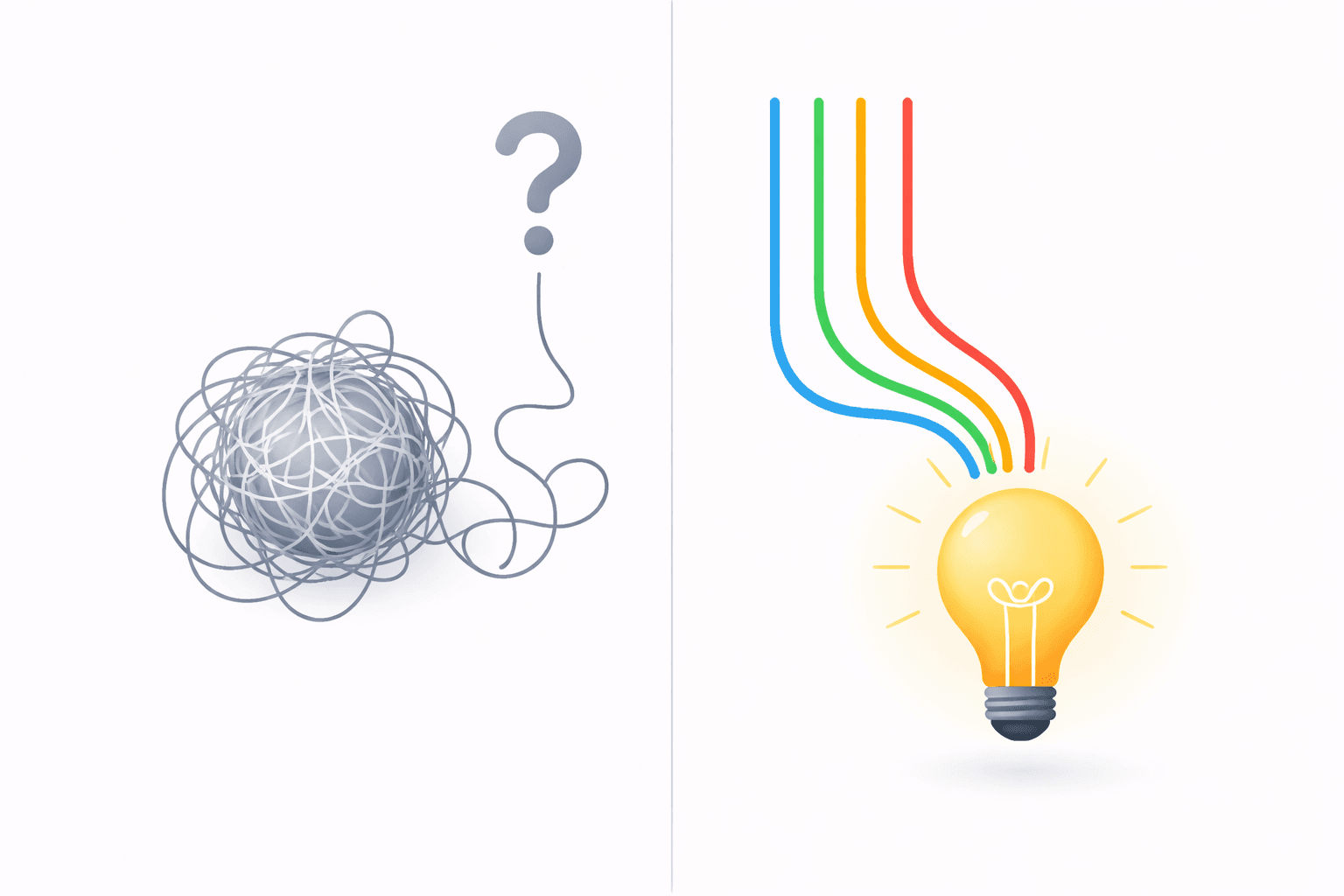
The single biggest factor in whether an AI tool gives you something useful or something useless is how you ask. The quality of the output is directly proportional to the quality of the input. This is not a limitation — it is an opportunity.
Think of prompting as emailing a capable stranger who has never met you. They are smart, willing, and fast — but they know nothing about your situation, your preferences, or your goals. The more context you provide, the better the result.
Why AI Takes Everything Literally
AI responds to what you say, not what you mean. It cannot read between the lines, infer your unstated preferences, or ask clarifying questions on its own (unless you tell it to). If you ask for 'a summary,' you might get three sentences or three pages. If you ask for 'a professional email,' you might get something appropriate for a CEO or a college intern. Specificity is everything.
The Four-Element Framework
Every effective prompt contains four elements. You do not always need all four, but including them dramatically improves your results:
- Task: What do you want the AI to do? Be specific about the action. 'Write,' 'summarize,' 'compare,' 'explain,' 'translate,' 'rewrite.'
- Context: What does the AI need to know about your situation? Who is the audience? What is the purpose? What background information is relevant?
- Constraints: What are the boundaries? Length, tone, format, what to include, what to avoid.
- Format: How should the output be structured? Bullet points, numbered list, table, email format, specific sections?
Before and After
Example 1: Writing an Email
Before: 'Write an email about the project update.'
After: 'Write a two-paragraph email to my team of eight engineers. Summarize that the API migration is on track for the March deadline, but the database schema changes need an additional week. Tone should be direct and reassuring. End with next steps.'
The first prompt could produce anything. The second one gives you something you can send with minor edits.
Example 2: Research
Before: 'Tell me about AI in healthcare.'
After: 'Give me five specific examples of how AI is currently used in hospital pharmacy operations — focus on medication dispensing, drug interaction checking, and inventory management. For each example, include one real statistic or study result. Format as a numbered list with bold subtitles.'
Common Mistakes
- Too vague: 'Help me with my presentation' — about what? For whom? How long?
- Assuming context: 'Rewrite this better' — better how? For what audience?
- Asking for opinions: 'What should I do about my career?' — AI does not know your values, constraints, or goals.
- Cramming multiple requests: 'Write an email, also create a spreadsheet formula, and suggest a meeting agenda' — split these into separate prompts.
- Not specifying format: If you need bullet points, say so. If you need a table, say so. Otherwise you get whatever the AI defaults to.
The Time Investment Pays Off
Writing a good prompt takes thirty seconds longer than writing a bad one. The good prompt saves you ten minutes of rewriting, re-prompting, or starting over. It is the highest-return time investment in any AI workflow.
Start with the four elements — task, context, constraints, format — and adjust from there. You will be surprised how quickly this becomes second nature.